Categories
Uncategorized

Is crypto mining the killer app for renewable energy?

It seems to me that the most aggressive use of renewable energy is actually is going to be to mine cryptocurrency.

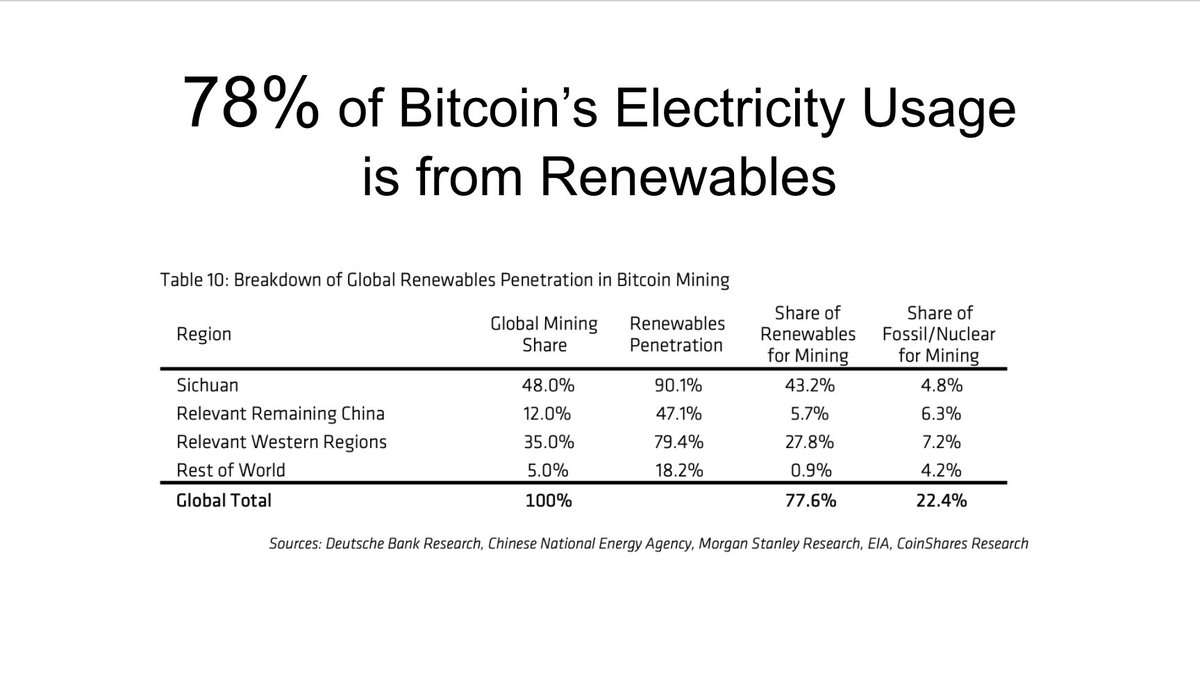
The author of this twitter thread cites a number of sources to show that renewables account for ~78% of the energy used to mine bitcoin:
As this article in an oil-industry-focused website says,

Gazpromneft recently began a cryptocurrency mining operation based in one of its Siberian oil drilling sites, “unlocking the power of Russia’s oil and gas resources for the needs of bitcoin mining”… Instead of paying a premium to use energy from the grid, locating the cryptocurrency mining on-site at an oil field means that a steady supply of natural gas is virtually free.

Also, generation of renewable energy is independent of demand: the sun shines regardless of whether there is demand or not. Similarly, there will be unusually windy days or stormy seas.

Now, humanity hasn’t yet cracked the problem of large-scale energy storage as of 2021. Which means at times when energy from renewable sources outstrips demand, energy is simply ‘wasted’.

People quickly figured that mining cryptocurrency is an excellent way to harness that excess energy. Indeed, as the well-argued shareholder letter of the new Norwegian crypto investment company Seetee says, [PDF]

Seetee will establish mining operations that transfer stranded or intermittent electricity without stable demand locally—wind, solar, hydro power— to economic assets that can be used anywhere. Bitcoin is, in our eyes, a load-balancing economic battery, and batteries are essential to the energy transition required to reach the targets of the Paris Agreement. Our ambition is to be a valuable partner in new renewable projects.


Categories
Uncategorized

Sustainable iPad accessories – Part 2

(Part 1 – what I mean by sustainable accessories)

From yesterday’s post,

Three, it needs to be long-lasting. Specifically, I’m not a fan of accessories that need proprietary software to work… need to connect to the internet to work… have built-in batteries in them.

It’s this constraint (can you really call it that?) that leaves no good options today.

  • Mice with proprietary bluetooth dongles don’t always work with the iPad. And it’s not clear which ones support multitouch at all, and even when they do, which multitouch gestures
  • Apple’s own second-generation Magic Mouse and Magic Trackpad, which – unlike the first-generation ones – support multitouch, have a built-in battery, and as this iFixit teardown shows, it’s really not easy to get to it, leave alone replace it.

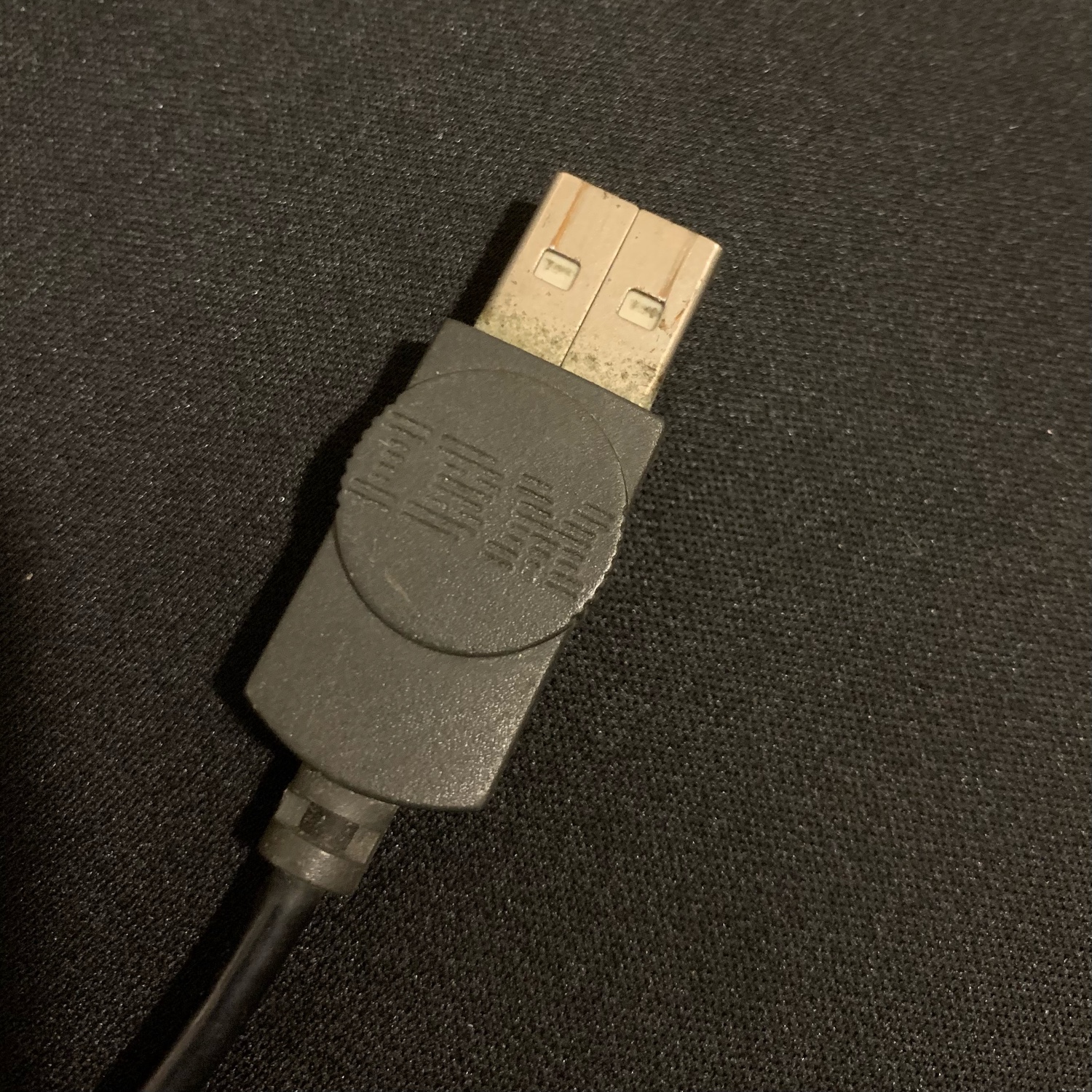
That leaves my ancient (by computing standards) IBM optical mouse from 2005.

This is from before IBM sold its consumer hardware division (including Thinkpads)to Lenovo.

The mouse plugs into an external powered USB hub that itself connects to the iPad via the USB-A port of the multi-port dongle. This way the mouse doesn’t draw power from the iPad.

The mouse has no power source or battery. It is wired and needs no software to work. Its LED will be one of the last components to fail – one of the buttons or the scroll wheel will likely go first.

Now it doesn’t support multitouch per se, but I can simulate swipe up and down with the scroll wheel, and swipe left and right with shift + scroll. And I can manipulate split view with the grab-bars on the top of the left and right windows, resize with the vertical grab-bar. Along with left and right click, it’s brought down the need to use the touchscreen down to a minimum.

But it’s still nowhere close to the slick multitouch experience of the first-generation Magic Trackpad on Mac OS, or the iPad’s touchscreen itself.

End note: It’s unfortunate that more manufacturers – and Apple in particular – don’t make either wired versions of their products or wireless versions with replaceable batteries. Most computer accessories don’t need to be any thinner or lighter. They do, however, need to last much longer than they do today. With Apple’s build quality, its accessories should last a couple of decades at least. It’s too bad the battery is the limiting factor.

(ends)

Categories
The Next Computer

Sustainable iPad accessories – Part 1

I’m thinking about sustainable hardware again today.

My iPad is effectively my primary computer.

My setup in December 2019. Hasn’t changed that much. A mousepad has set my iPad 3 free.

Despite the excellent keyboard shortcuts setup, I don’t want my only pointer to be my finger on the touch screen.

In other words, I want an external pointing device. It needs to fulfil three conditions:

One, it shouldn’t be built into a case. I already have the Smart Keyboard Folio I bought along with the iPad. It’s relatively light, the keyboard is good, and detaching the iPad is trivial.

Two, it needs to support multitouch. I have the first-generation Magic Trackpad, but it doesn’t support multitouch. That’s quite unfortunate, because it really is a beautiful piece of hardware that’s lasted me nearly seven years and it still going strong.

Three, it needs to be long-lasting. Specifically, I’m not a fan of accessories that

  • need proprietary software to work, because their lifespan depends not on their own hardware but on that software continuing to be maintained
  • need to connect to the internet to work, for much the same reasons above. We’ve discussed the perils of smart devices often on this site
  • have built-in batteries in them. The lifespan of the hardware is now linked to that of this battery. Few manufacturers make it easy to replace built in batteries (typically Li-ion ones). And even if they could, there are no standard batteries that one could buy from third parties. On the other hand, accessories that use external batteries like AA or AAA cells are far more reliable – those are standard batteries and (while they’re not great for the environment) will likely be produced much longer than I expect the hardware to last.

(Part 2 – what my options are)

Categories
Audience as Capital Life Design Wellness when Always-On Writing

Mental health Whatsapp group

A couple of days ago I started a Whatsapp group about mental health, something that’s rather important to me.

Here is the link to the Whatsapp channel.

And here is how I describe the channel:

Links to articles and short commentary on living a less rushed, less stressful, less distracted life. A shared journey from surviving to thriving. From someone who’s been through the lows of burnout, depression and chronic pain.

On this site, we explore mental health in the context of technology under the tag Wellness When Always-on.

My first message on the channel referenced a quote I had linked to in a blog post from almost exactly a year ago:

This is the second Whatsapp group I have recently begun publishing on, the first one being one on bitcoin, cryptocurrency and decentralised finance, which now has subscribers from ~13 countries.


(Featured Image Photo Credit: Laura Ockel/Unsplash)

Categories
Investing Real-World Crypto

Bitcoin institutional purchases now influencing price

From the Indian financial news site Moneycontrol:

Bitcoin surged to over $55,000, albeit briefly, this week… the interest comes primarily from institutional investors as they hope that stimulus checks from the Biden administration will pump financial markets and lift cryptocurrencies.

– “Bitcoin breaks $55,000 as interest from institutional investors stirs appetite: Report

Just a couple of years ago, mere interest from ‘institutional investors’ in cryptocurrency was weird. Bitcoin – and cryptocurrency in general – was dismissed as too volatile, purely speculative, a conduit for terror financing and the drug trade.

All of this is still true. And yet, institutional investors have not just come around, their buying of bitcoin now influences the price itself.

Categories
Investing

Countries → Corporations

Up until a couple decades ago *countries* used to threaten/inspire. Japan. Asian Tigers. China. BRICS. Dubai.

Now it’s *companies*: Apple, Amazon, Google, FB, Tesla, SpaceX, Tencent, Grab, Zoom, Nvidia, Goldman, Softbank, Palantir…

Countries are left scrambling, looking to stake claim to tax revenues.

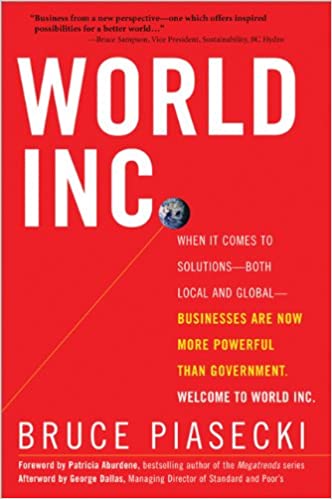
On a related note, I’d picked this (print) book up a couple of years ago. I’ve yet to get to it.

Categories
Personal Finance Products and Design Real-World Crypto

The e-yuan cryptocurrency and privacy

China’s e-yuan – the Financial Times takes a look at how the Chinese Government is pushing adoption of the natively-digital currency, not just to advance payments and investments, but also to exert even greater control over its population: “Virtual control: the agenda behind China’s new digital currency

(Article on Financial Times; may be paywalled; consider supporting good journalism)

China is intent on becoming the first large economy to introduce a digital currency, showcasing its position as the global leader in payments technology to the world at next year’s Winter Olympics.

Cryptocurrencies are often decentralised; they are not issued or backed by governments. The “e-yuan”, by contrast, is part of China’s top-down design… the digital currency project is tied up in the Communist party’s drive to maintain control over society and the economy. The technology is partly designed to reinforce its surveillance state.

Its digital format enables the central bank to track all transactions at the individual level in real time. “we will give those people who demand it [paper money and coins] anonymity in their transactions… but at the same time, we will keep the balance between the ‘controllable anonymity’ and anti-money laundering, CTF [counter-terrorist financing], and also tax issues, online gambling and any electronic criminal activities”

If current statements by the government are any measure, it’s a pretty big blow to privacy. The e-yuan is also seen

as a means to reassert state control over its fintech industry and a vast e-payments market that is dominated by two huge private companies, Ant Group and Tencent… the digital renminbi is distributed directly to the e-wallets of users by state-owned banks, thus setting up payments channels that circumvent Alipay and WeChat Pay.

Categories
Data Custody Personal Finance Real-World Crypto

Nigeria and cryptocurrency

Earlier in February, the central bank of Nigeria banned its banks and financial institutions from servicing cryptocurrency exchanges. Nigerians now have little to no options to convert their local currency to bitcoin and cryptocurrency – which I suppose was the objective.

A few things in this context are notable:

~ This sounds identical to the 2018 ban by Reserve Bank of India.

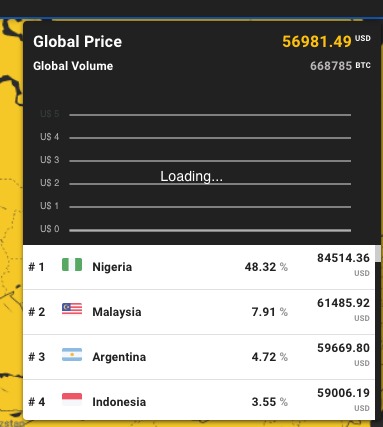
~ Bitcoin is now trading at nearly a 50% premium in Nigeria: see http://www.bitcoinpricemap.com

~ Since there are no online exchanges, this is probably on local P2P markets like https://localbitcoins.com . This is as transparent a signal as you can get for how desirable cryptocurrency is there. Bitcoin in Malaysia, Indonesia, India, Turkey, and most South American countries is also trading at significant premiums – although Nigeria is off the charts.

~ Late last year, there was press coverage internationally on how anti-police-brutality protestors were using bitcoin (and potentially other tokens) to raise funds: “Nigerian Banks Shut Them Out, So These Activists Are Using Bitcoin to Battle Police Brutality

~ Throughout 2019 and 2020, Nigeria topped Google trends for searches around bitcoin. One reason could be simply because Nigeria’s currency really hasn’t done well versus the dollar, or simply because Nigeria is a very young country and there’s curiosity about crypto: “Why Nigeria Tops Google Searches for Bitcoin

Categories
Investing Real-World Crypto

Bitcoin ETFs

The world’s first two bitcoin ETFs have listed, both in the middle of February. Of all places, in Canada 🇨🇦 , on the Toronto Stock Exchange.

The first one, Purpose Bitcoin ETF, trades under the ticket BTCC, and had over USD 700 million in asset as of Thursday. The second one, Evolve Bitcoin ETF, began trading as EBIT and has assets of over USD 500 million.

Both started with management fees of 1%, which pretty high is as far as ETFs go. Evolve has since cut its fees to 0.75%.

Evolve has also started paperwork for an Ethereum ETF (press release).

In general, this means that the institutional infrastructure required to support an ETF is up and ready and running for the bitcoin world: a custodian to actually invest the money into bitcoin and hold that bitcoin securely, a reference price that the regulator is confident enough to sign off on, and so on.

I think it’s very interesting to see new jurisdictions like Canada open up to innovation like this.

The USA SEC has been wary of bitcoin ETFs for years now, having shot down many applications from asset managers to launch one. There have been new applications in 2021, and the Canadian green light may help persuade the SEC to follow suit.

Categories
Data Custody Decentralisation and Neutrality Real-World Crypto

The difference between a central bank digital currency and a prepaid wallet

This article in last week’s issue of The Economist is a decent overview of central bank digital currencies, or governments issuing their own cryptocurrency.

According to the article, the main difference between these and the cashless payment systems we already use, like prepaid wallets, is “money held on a CBDC app or website will be equivalent to a deposit at the central bank”.

Similarly, the article predicts, such money held in private payment/wallet apps will still be equivalent to being held at the bank, not on the payment providers’ balance sheet. This is unlike today, where adding money into an Amazon Pay prepaid wallet is no longer on your banks’ balance sheet, it’s on whatever Amazon subsidiary holds the prepaid wallet license.

To be clear, none of these central bank digital currencies are really on ‘public’ blockchains, even though governments may piggyback on the term since it’s usually associated with them. They’re centralised, in that while their architecture may nominally resemble decentralised one like, say, the Ethereum blockchain, there’s almost certainly going to be tight control over who can run nodes.

Finally, I was disappointed that the article made only one passing reference to the programmable nature of digital currency, something that is widely done in crypto projects today’s using “smart contracts”, often the most innovative part of such projects. But back in September 2020, we had explored this topic in more detail: