Categories
Discovery and Curation The Next Computer Wellness when Always-On

Applying anti-smoking techniques to content addiction

(via Kottke.org)

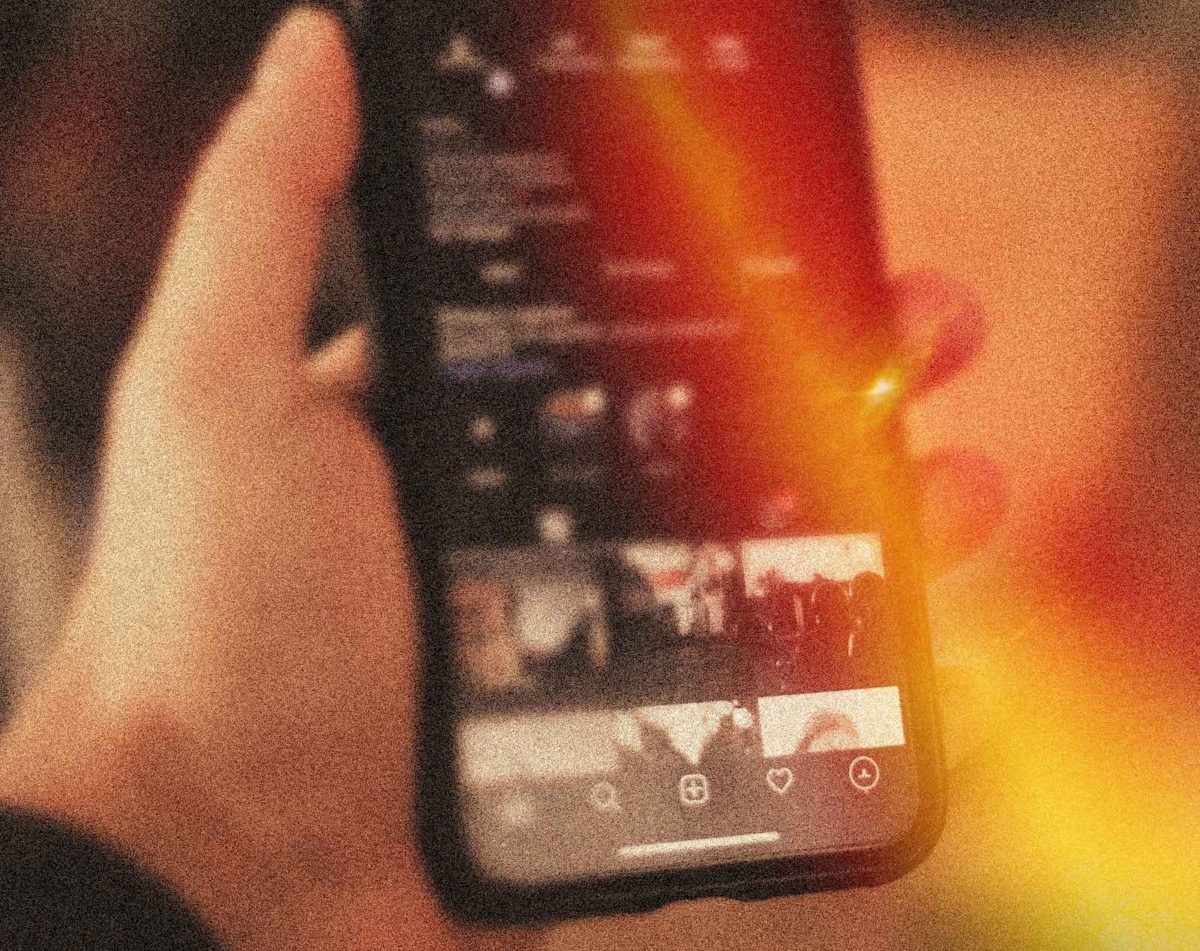
This writer tried the usual techniques to kick her phone addiction – turning off notifications, deleting apps, tracking usage, using apps to block usage, going cold turkey – none of it worked. Then she turned to a technique people use to quit smoking – one of the hardest addictions to kick. From the book she read:

… there is a huge disconnect between what we want and what we actually enjoy. They’re different neurological processes. That’s why you can desperately crave, for example, an entire blueberry cheesecake, but when you actually eat it, it’s only OK… He tells smokers to pay attention to their next cigarette. It’s like mindfulness but for noticing the unpleasantness. How does it taste? Not, “how did you imagine it would taste when you were craving it,” but how does it actually taste?

When the writer tried it with her phone consumption,

I paused and paid attention to my body. Do I feel better than I did 30 seconds ago, or worse? Inevitably, it was worse. My brain felt frazzled and crunched up. My body felt more tense and defensive. The experience had been a net loss… The more I really paid attention to the reality of how much I “liked” checking my phone, the easier it became to resist the impulse.

It’s fortuitous I should come across this. As I’ve been going through my second 30-day Reddit isolation, I have realised that I do enjoy browsing the site, but I pass from happiness to mindlessness pretty quickly, without realising it. Quitting entirely is a net negative, but so is consumption without self-awareness – I’m working on understanding what that transition point is for me.


(Featured image photo credit: Lawless Capture/Unsplash)

Categories
Wellness when Always-On

This year has reset your life’s boundaries – what are you going to do about it? – Part 4

(Part 3)

While Shawn Blanc schedules every minute of his day so he can make “make sure I do all the things I want to do”, the investor Marc Andreessen, in a famous 2007 blog post, described the polar opposite:

Let’s start with a bang: don’t keep a schedule.
He’s crazy, you say!

I’m totally serious. If you pull it off — and in many structured jobs, you simply can’t — this simple tip alone can make a huge difference in productivity. By not keeping a schedule, I mean: refuse to commit to meetings, appointments, or activities at any set time in any future day. As a result, you can always work on whatever is most important or most interesting, at any time.

Want to spend all day writing a research report? Do it! Want to spend all day coding? Do it!

You don’t have to follow either extreme – although if you do and find that it’s working, I’d like to know and learn.

The three important principles here are

Be mindful of the fact that distractions will fill up space that you don’t actively schedule.

Be mindful of what you schedule for yourself.

Set aside time for mindfulness.

For the last, I point you to my twenty-minute daily solitude practice.

Since your life is the sum total of how you spend your time, a reset of the boundaries of your time means a reset of the boundaries of your life. This year is an opportunity to change power balances, almost all of which involve you trading your time. Seize it.

(ends)


(Featured image photo credit: Tim Mossholder/Unsplash)

Categories
Discovery and Curation Wellness when Always-On

This year has reset your life’s boundaries – what are you going to do about it? – Part 3

(Part 2)

My Morning Routine is an website we have referred to once or twice on this site. It describes itself as

… a retired independent online magazine that published a brand new, inspiring morning routine every Wednesday between December 2012 and July 2019.

It’s unfortunate that they aren’t publishing new interviews this year, or even updates to existing one. It’d be interesting to see how people’s routines changed in the new work-from-home world in 2020. What would it say about those whose routines had not changed much?

Their last published routine in July 2019 featured this:

I view the first few hours of the day as “free,” unclaimed time. If I don’t use it deliberately, I’ll squander it on email or Twitter or the news or some other mindless timesuck that doesn’t make me feel good. Plus, I’ve learned that my focus is better in the morning than it is later in the day; I want to make good use of that time.

This resonated with me, because even last year it revealed an awareness of the need to claim time for yourself, however you then choose to spend it.

We had discussed the question of how in my post about stretching out time:

We can choose to restart an interest of ours. Re-engage with communities and groups we’ve fallen out of touch with. Start a new hobby we’ve always liked but didn’t know if it’d stick. Pursue our physical and mental well-being. Join a local cause. Whatever it looks like for each of us. And do it for no reason than because we can.

The writer Shawn Blanc takes it to an extreme by scheduling every minute of his life (or at least he did, in 2016):

I used to think a schedule meant I’d never get to have fun. Because if you’re scheduling your time then you should only put Super Duper Important things on your schedule.

Well, I do only schedule Super Duper Important things. I just have a smarter definition of Super Duper Important.

Did you know I schedule time to watch Netflix? I schedule time for a mid-day nap if I want. Time to read for an hour and a half in the middle of the afternoon. Time to take my wife out for dinner once a week. Time to go running at the gym. Time to play trains with my kids. Time to have lunch with a friend. Time to help my wife with dinner. Time to write for as long as I can handle in the morning.

In fact, by scheduling every minute of my day, I help make sure I do all the things I want to do — for work and for play.

(Part 4 follows tomorrow)


(Featured image photo credit: Tim Mossholder/Unsplash)

Categories
Products and Design The Next Computer Wellness when Always-On

This year has reset your life’s boundaries – what are you going to do about it? – Part 2

(Part 1)

In the old world, boundaries used to be imposed naturally, although they were not always welcome. Leaving for work was a sharp boundary. The start of the work day at the office was another. Then there was the lunch break. Your commute back. Your evening at a pub or a restaurant. And so on.

Those boundaries were almost always set by (or with) someone else. Typically the only one you truly set was your run or gym session.

In the absence of those boundaries, your time is up for grabs. This is a threat and an opportunity. If you’re passive about it, it’ll be claimed – all of it – by your boss, by your kids, by social media and online TV, and by a hundred parallel low-attention messaging threads.

I’ve seen this story before: back in 2009, I ran the consumer Internet division of a company. The flagship product was an SMS subscriptions store that promised to fill up the tiny free moments in your life: waiting for your train, taking the elevator, standing in line. It was designed on the premise that you had a finite number of such moments in your life, and therefore needed a finite (though renewing) amount of content to fill them. It was a great idea and took off immediately. Within weeks we had over a quarter of a million people try it out, and a significant number of them jump through hoops for paid content on the store.

But in just the next couple of years, most of the Indian middle class had smartphones, everyone had Facebook – and Twitter – on their phones. They had games from Zynga and from local studios. They discovered YouTube! And just like that, you had an infinite amount of content to fill those little moments.

But the tide shifted even further. Filling crevices of time wasn’t enough, this new content created new gaps for itself. You’d quickly scroll through Facebook at traffic stops until the car behind honked at you. You’d interrupt meals to post photos on Instagram. You’d check Twitter during conversations. You’d play games while putting off chores.

By the middle of the 2010s, we were already living fragmented lives. At the end of the decade, the pandemic has knocked down natural boundaries of time too. Everything is fluid.

What shape are we going to give it?

(Part 3 follows tomorrow)

(Featured image photo credit: Tim Mossholder/Unsplash)

Categories
Discovery and Curation The Next Computer Wellness when Always-On

This year has reset your life’s boundaries – what are you going to do about it? – Part 1

In my post earlier this month, we saw how you can make time stretch longer while also improving its quality:

Living deliberately is making an active choice in how to spend one’s time – and, over weeks, months and years – one’s life… Fewer hours just slip by. Days begin to look different. Milestones emerge. Memories form. A narrative forms about how we spent October or November. Time crystallises, no longer disappearing through a sieve.

This year – and who knows how much longer – a combination of less structured days and ubiquitous entertainment from our devices means it’s easy to fill up time outside of our commitments via endless consumption. It’s not just easy, it’s the default way we’ll spend our time.

This year the severe curtailing of face-to-face meetings outdoors means that we’ve moved to messaging to keep in touch. With all of its upsides, messaging with a bunch of people all days takes – all day. It’s less efficient than a conversation, it means day-long interruptions via notifications, and unlike a catch-up, has no defined beginning and end.

Added to this, we have an abundance of apps that have been designed to hold our attention: notifications, pull to refresh, gamification with streaks, guilting through use of language, ‘smart’ defaults like auto-loading the next episode, and a myriad of others. It’s hard to say no. The minutes and hours add up: go to either iOS’s Screen Time or Android’s Digital Wellbeing Dashboard to see how long you spend on your devices, and how often you pick them up.

Further layer on top of this the end of any boundary between work time and ‘life’ time. Despite increased flexibility for the most part, not only are we starting work early but are also less and less putting a firm end to it.

The common theme across these is the blurring of boundaries.

(Part 2 follows tomorrow)


(Featured image photo credit: Tim Mossholder/Unsplash)

Categories
Uncategorized

Writing daily

The entrepreneur Rajesh Jain on why he writes daily. When I discovered Rajesh’s blog in the early 2000s, he used to publish multiple posts daily. It got me into writing on my site, writing to him, and ultimately working with him for nearly half a decade.

I have reproduced three of his paragraphs as-is – editing does them no justice. Any emphasis is mine:

Writing is a way for me to organise my thinking. I have never bothered about who is reading. I write for myself. But I write publicly – as a sort of record of what I am thinking. I have never deleted or retracted any post that I have written. I have changed my views over time on many topics, but I have let the writings stay. Each post has a context – it is at a date and time. I try and be as candid in my writings as is possible. Because if I cannot be honest, then there is no point in blogging.

I write daily because it inculcates a discipline. I like the idea of short posts daily rather a long essay periodically. There is something new to look forward from me each day! And just maybe, this blog can become a utility in the lives of others – a daily habit. That is what it had become for many in the first decade of my writing.

Writing daily is a process of self-discovery. It makes me think how I should express myself. It makes me clarify my own thought process. It makes me little better each day. And I hope that process continues!


(Featured image photo credit: Thought Catalog/Unsplash)

Categories
Audience as Capital Data Custody Decentralisation and Neutrality

Three takeaways from the youtube-dl episode

This episode about the takedown and reinstatement of the video-downloading tool youtube-dl (Part 1, Part 2) makes three things clear.

One, centralised platforms like Github are single points of failure. This is especially unfortunate on the Internet, which is decentralised from the ground-up. Maintainers of projects like youtube-dl must invest in building a censorship-resistant presence online.

Two, despite decentralization, we need organizations like the EFF, the Mozilla Foundation, the Tor Project, the Wikipedia Foundation, the Internet Archive. To that end, we must support them monetarily and, if possible, by volunteering. We must also hold them to extremely high standards of ethics and neutrality and keep them from being beholden to, or even the appearance of being beholden to, a government or a particular tech company. If they make bad strategic decisions, we must criticise – constructively. They may not be big, but they are too important to fail.

Three, we must recognise that every one of us needs to be an activist for an open Internet. Our actions and inaction have consequences. If no one had expressed their opinion on this issue online – even merely through blog/Medium posts or tweets – it’d be harder for the EFF’s efforts to have the impact that they did. Think back to other instances where Internet companies have been pressured into reversing decisions due to public opinion: the tussle between Apple and the email app Hey being the most recent one. Hey’s founders have a great many followers they could rally, but it was those followers that made the difference. The greater your online audience your capital, the greater your responsibility to be a good citizen of the Internet.

Categories
Audience as Capital Data Custody Decentralisation and Neutrality Discovery and Curation The Dark Forest of the Internet

The reinstatement of youtube-dl

Context: we had discussed last month how GitHub had taken down the code and binaries for the youtube-dl project, a tool that can be used to download videos from YouTube and a variety of other sites, and how and why it was a travesty.

In a post written by the company’s director of platform policy, the code-hosting platform said the following:

The youtube-dl takedown notice fell into a more unusual category: anticircumvention—an allegation that the code was designed to circumvent technical measures that control access or copying of copyrighted material, in violation of Section 1201 of the DMCA.

Section 1201 dates back to the late 1990s and did not anticipate the various implications it has for software use today. As a result, Section 1201 makes it illegal to use or distribute technology (including source code) that bypasses technical measures that control access or copying of copyrighted works, even if that technology can be used in a way that would not be copyright infringement. Circumvention was the core claim in the youtube-dl takedown.

Establishing that, the post then goes on to state that in their opinion, the youtube-dl project did not circumvent technical measures:

Although we did initially take the project down, we understand that just because code can be used to access copyrighted works doesn’t mean it can’t also be used to access works in non-infringing ways.

Then, after we received new information that showed the youtube-dl project does not in fact violate the DMCA‘s anticircumvention prohibitions, we concluded that the allegations did not establish a violation of the law.

This new information came through a letter sent by the Electronic Frontier Foundation’s attorney [PDF] to GitHub. This is the highlight of the whole story for how well it explains what youtube-dl does and does not do. Quoting from the letter, not necessarily in the order in which they appear in the letter:

when a user requests certain YouTube videos, YouTube’s servers send a small JavaScript program to the user’s browser, embedded in the YouTube player page. That program calculates a number referred to as “sig.” That number then forms part of the Uniform Resource Locator that the user’s browser sends back to YouTube to request the actual video stream. This mechanism is completely visible to the user simply by viewing the source code of the player page. The video stream is not encrypted, and no secret knowledge is required to access the video stream… Importantly, youtube-dl does not decrypt video streams that are encrypted with commercial DRM technologies, such as Widevine, that are used by subscription video sites, such as Netflix

We presume that this “signature” code is what RIAA refers to as a “rolling cipher,” although YouTube’s JavaScript code does not contain this phrase. Regardless of what this mechanism is called, youtube-dl does not “circumvent” it as that term is defined in Section 1201(a) of the Digital Millennium Copyright Act, because YouTube provides the means of accessing these video streams to anyone who requests them.

To borrow an analogy from literature, travelers come upon a door that has writing in a foreign language. When translated, the writing says “say ‘friend’ and enter.” The travelers say “friend” and the door opens. As with the writing on that door, YouTube presents instructions on accessing video streams to everyone who comes asking for it.

youtube-dl does not violate Section 1201 of the DMCA because it does not “circumvent” any technical protection measures on YouTube videos.

This is wonderfully explained, and the analogy is spot-on.

I do not expect Github’s lawyers to have understood this mechanism when they first received the takedown request from the RIAA, but one would expect them to have discussed this with someone technical at GitHub, who either knew or could have asked the project about this mechanism, and this technical person and the lawyers could have determined that it did not circumvent technical measures. My guess is that in an effort to project neutrality, they did not initially take a stance one way or another. Indeed, the blog post has a short section at the beginning titled “Why did Github process this takedown in the first place?” which doesn’t really address why they went all the way to removing the youtube-dl project if they understood the issue:

As a platform, we must comply with laws—even ones that we don’t think are fair for developers. As we’ve seen, this can lead to situations where GitHub is required to remove code—even if it has a multitude of non-infringing uses—if it is in fact designed to circumvent a TPM. But this is exceedingly rare. 

I think it’s the EFF’s advocacy, finally in the form of a legal document, that gave GitHub the confidence – or cover – it needed to do the right thing. That combined with the public outcry against this.
Categories
Wellness when Always-On

The ‘social’ in social media is important

These are powerful findings from a study on the use of social media. In short, the most people interacted with others on social media, the happier they were. The more passively they scrolled, instinctively comparing themselves with others selectively-published lives, the worse they felt.

Wirtz notes that viewing other people’s posts and images while not interacting with them lends itself to comparison without the mood-boosting benefits that ordinarily follow social contact, undermining well-being and reducing self-esteem. “Passive use, scrolling through others’ posts and updates, involves little person-to-person reciprocal interaction while providing ample opportunity for upward comparison.

The more people used any of these three social media sites, the more negative they reported feeling afterwards. “The three social network sites examined—Facebook, Twitter and Instagram—yielded remarkably convergent findings,”…

Wirtz’s study also included offline interactions with others, either face-to-face or a phone call. Comparing both offline communication with online, he was able to demonstrate that offline social interaction had precisely the opposite effect of using social media, strongly enhancing emotional well-being.

The study was conducted across ten days of social media use. I iwsh I could find what the sample size was. The freely-accessible preview of the paper (link) does not state this.

However the conclusion is clear. If you use social media to stay in touch with people, form new connections, join and try out new communities, you will find it is energising. If you use it as an endless timeline of other people doing things you are not, it’s not hard to see that the experience would leach happiness from you.

I’ve always kept in touch with many friends over messaging apps and email. Anonymous interactions on my Reddit communities have been mostly rich and wholesome. So while I am not on Facebook or such social networks, while I’m on relatively few online groups, and while even before the pandemic I used to meet relatively few people in person, I’ve always felt connected and energized by my social interactions.


(Featured image photo credit: Priscilla Du Preez/Unsplash)

Categories
Wellness when Always-On

What are you unwilling to feel?

From a readworthy interview of Tim Ferriss by GQ magazine:

I know centi-millionaires and billionaires who are utterly miserable. As Derek Sivers, one of my friends and podcast guests, once said, “If more information were the answer, we’d all be billionaires with six-pack abs”… The inescapable fact that if, at best, you tolerate yourself, and more often berate, hate, or criticize yourself, how can you possibly fully engage with others, accept and love them, and find peace of mind and life? I think the answer is you can’t.


To borrow from Tarah Brach, she said to me once, “There was a wise old sage who said, ‘There’s really only one question worth considering and that is: What are you unwilling to feel?’” So I really check in, in the morning and at night. Do you wake up with a sense of foreboding and anxiety and a desire to stay in bed? When you go to bed, is it full of anxiety and worries and preoccupation about what happened, or what’s going to happen the next day? If so, that’s an issue.

A good relationship with yourself is the foundation of thriving at life. The problem almost always is that you can hardly work on cultivating an accepting relationship with someone how you treat with distaste. I dealt with this for a long time – years. I wrote to myself then

“If I treated another person like this they would not survive for even a short period of time… Finally, even meditating on this is difficult. My mind is filled with hate about the person meditating. This means that when awareness returns after my thoughts wander, instead of observing that fact and moving on, there is an eruption of castigation at the meditator’s inability to even hold their own thought.

This is when external counselling helps – it’s an intervention for both of your you-s to talk to each other.