Categories
Audience as Capital Discovery and Curation

From trust in institutions to trust in individuals – Part 1

It’s worth writing about this single question and its answer from an interview with Casey Newton, a writer for the online publication the Verge, and who also runs his own newsletter (that I am subscribed to).

The question itself frames the problem well:

People often say that “people who can tell stories rule the world”. It seems to me that we’re at one of those historical inflection points where the ability to speak convincingly about what is going on and how we ought to feel about it are shifting towards an entirely new kind of competency and expertise on the part of the storyteller. The world (including the tech world we live in) is getting super complex!  So on the one hand, this compounding complexity makes it harder for journalists, PR people, salespeople, storytellers of all kinds, to actually have a complete understanding of what they’re talking about. But on the other hand, that very same complexity gives their stories more power: people need a narrative; they need explanations that make sense to them

The writer Casey answers well too. Some excerpts:

I think it’s been hard on average citizens and news consumers. There is much more high-quality information available to them at their fingertips, often for free, than there ever has been before. But there’s also an incalculable amount of bullshit all around them — much of it being pushed by those influencers and content marketers and PR people. There are now six PR people for every working journalist in the United States, by the way, and it feels like most of them are in my inbox daily.

The rise of content marketers and influencers have given [founders] friendly new channels to promote their work — ones that won’t ask the more difficult questions that journalists will

A weird phenomenon in our current era is that while trust in institutions is generally declining, trust in individuals is increasing. A journalist can become of those trusted individuals — either by gaining access to a big platform perch (anchoring a CNN show, say) or by developing deep expertise on a subject of growing importance. Either way, there are new ways to win now.

See also: the series we did on 21st Century Media.

(Part 2 – what about long-term trust?)
Categories
The Next Computer Wellness when Always-On

Feedback and motivation, app edition – Part 2

(Part 1)

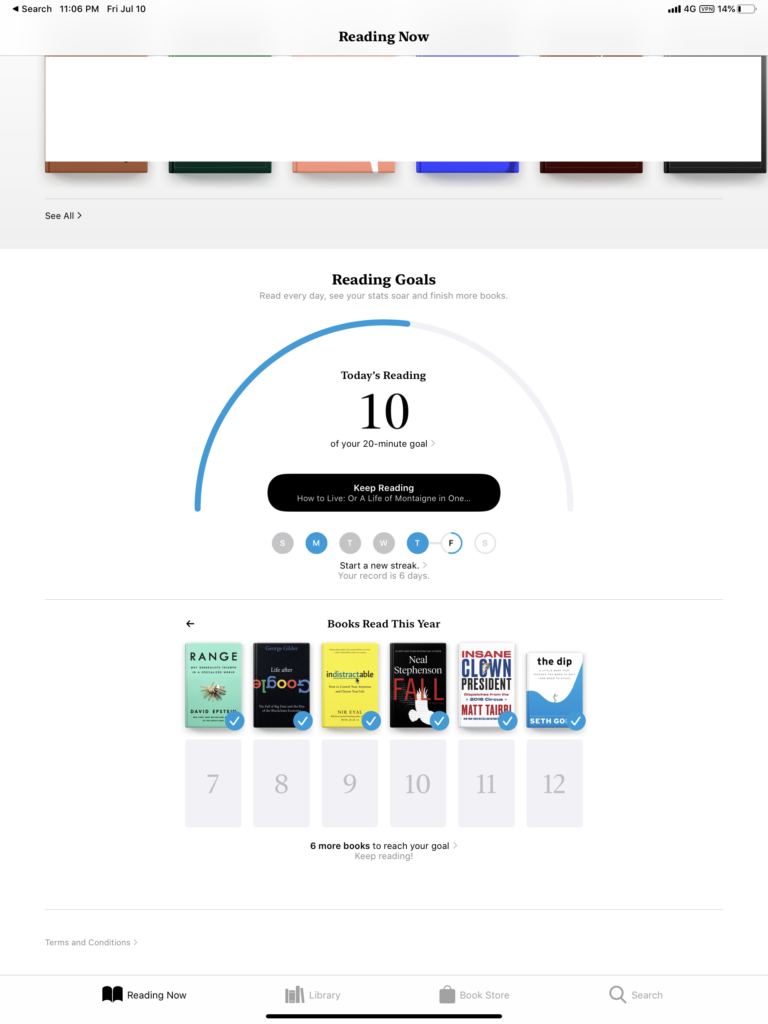
Another app I use in my routine that makes good use of feedback for motivation is Apple Books (formerly iBooks).

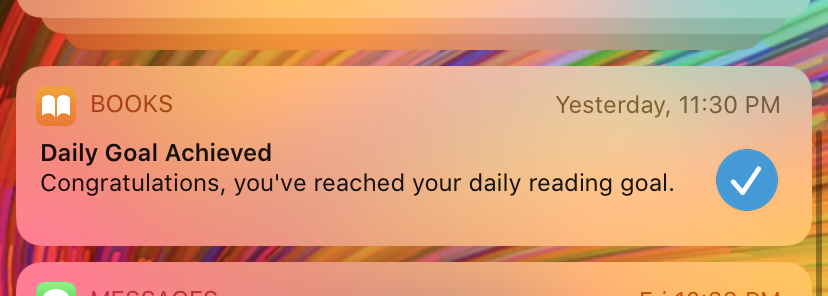
You can set a daily reading goal – I’ve set it to twenty minutes, even though I will get a little more done every day. The app then tracks this as you read over the day, and sends you a notification when you’re hit it.

The app then logs streaks for the number of days that you’ve hit this goal. You can see this in the large screenshot at the top. For me, streaks are highly motivating [1]

Books also syncs daily reading across iOS devices. I could read in the balcony on my iPad, pace around reading on my iPhone when I’m winding down, and both will count towards a single reading goal. I’ll get the achievement notification on whatever device I happen to be using at the time.

Finally, you can also set a goal for the number of books you’d like to read in a year, and as you finish a book the app will add the cover to a virtual bookshelf. You can see this at the bottom of the large screenshot. While it’s certainly one way to get me to read more books on Apple Books than any other, it’s never going to cover all the books I read – some will be paper books, others audiobooks. I will, though, read books that I have bought on the Amazon Kindle bookstore in Apple Books (deDRM + Calibre) – to re-iterate, this is for books I’ve paid for.

These simple mechanisms promote good habits in a lightweight, low-stakes way. It’s a refreshing contrast to the dark patterns common throughout the internet.


[1] That works two ways. Because I find streaks a good motivator, I also find negative feedback, especially guilt, highly off-putting. A big reason I gave up learning a language on Duolingo was because it was highly streak-oriented, which was great, but if you missed a streak the app would surface icons and text stating how I’d made the Duolingo bird sad. For me, positivity works, negativity not at all.

Categories
Data Custody Product Management The Next Computer Wellness when Always-On

Feedback and motivation, app edition – Part 1

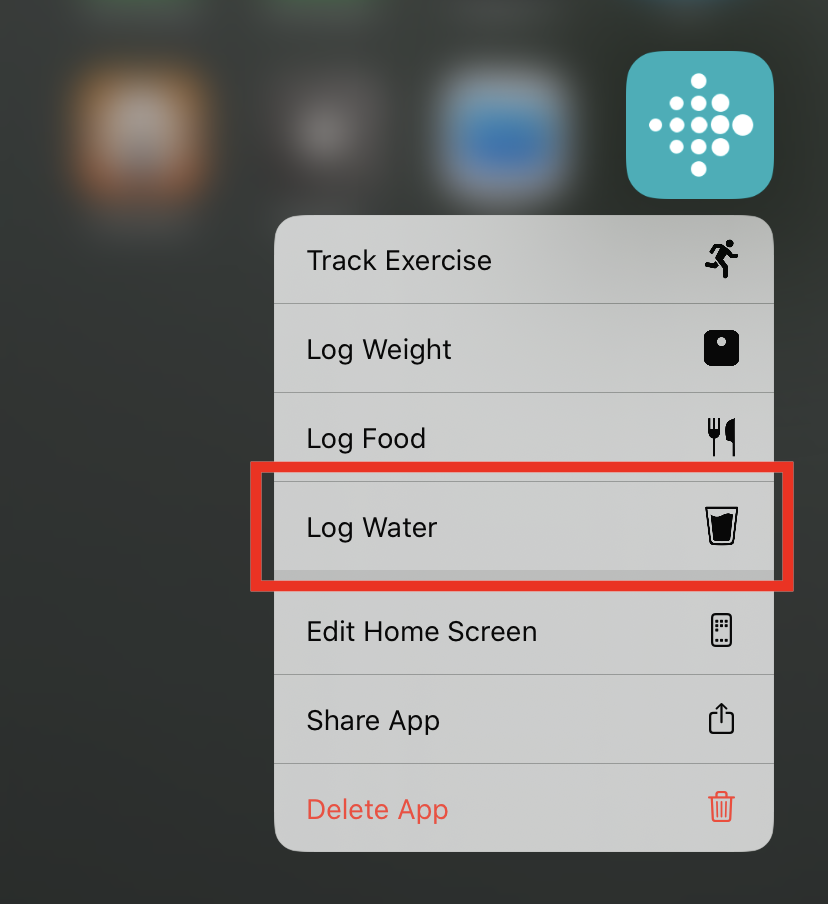
We saw yesterday that I moved my Fitbit app to the home screen. This placement of the app is solely for me to log my water intake, available as a home screen quick action:

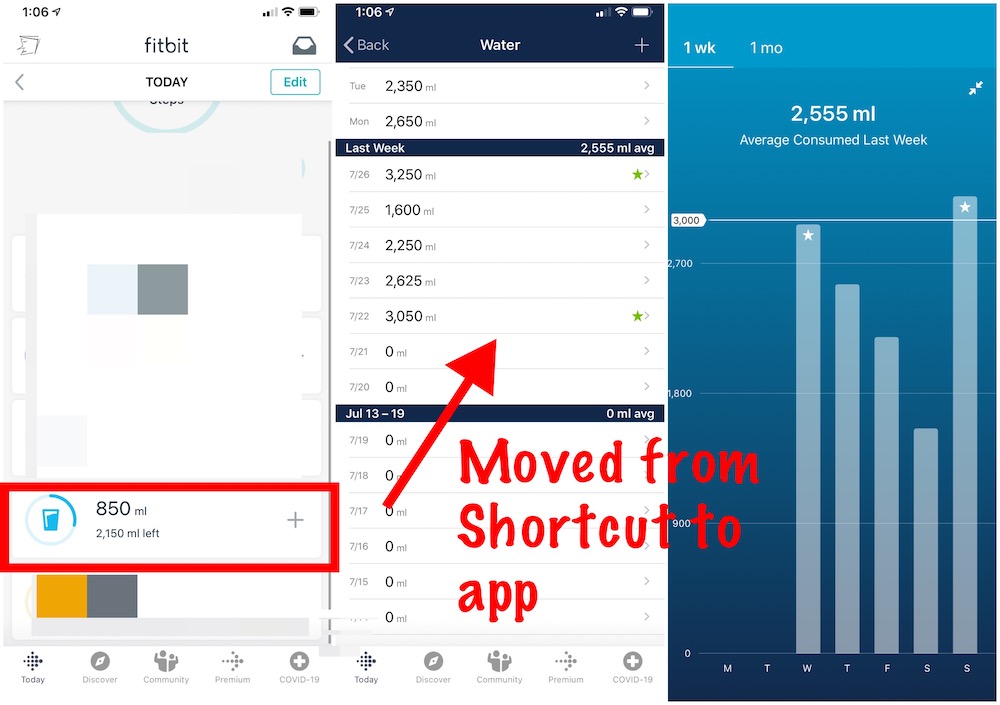
I have ended up using this despite me creating my own iOS Shortcut. Even though my shortcut is easy to launch, offers a menu of sizes instead of having to type an amount, and stores my intake and timestamp in an open plaintext format. This was puzzling to me.

When I reflected on this, I understood that the Ftibit app gave me a view of my progress towards the day’s goal (which I had set), and compared it with previous days’. My Shortcut logged data with less friction, but I have yet to build in any feedback about the day’s total intake.

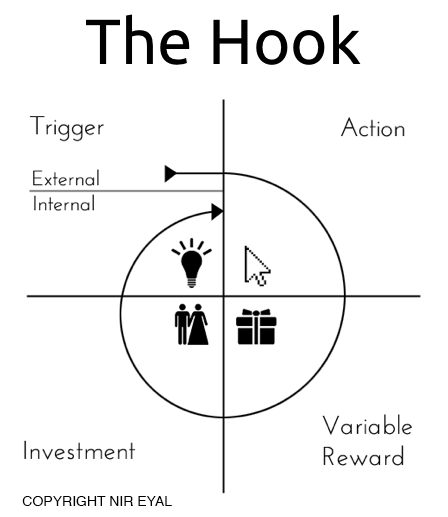
That little gap, that failure to close the loop – led me to unconsciously gravitate towards something less elegant and more time-consuming. There’s a little bit of the Hooked framework at play here:

Trigger, Action and Investment are self-explanatory in this context. The reward here is not variable in the way checking for new email and for Instagram likes is, but it’s good to know how close I am to my daily intake goal – I’ve forgotten from the last time I logged my water intake and checked.

Understanding this has helped me be aware of how much I’m influenced by such signals. I’ll be more deliberate in building these into systems I create for myself, and to watch out for such patterns in systems I interact with, beyond obvious ones like badgers and notifications.

(Part 2 – another app in my routine that incorporates feedback and motivation)

Categories
The Next Computer

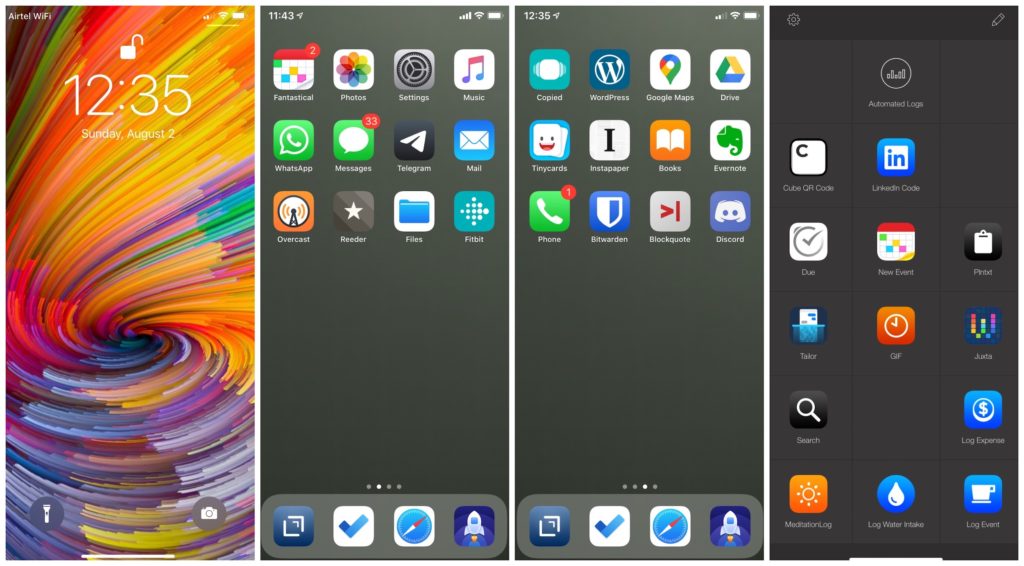
iPhone home screen, August 2020

What’s changed this month over July:

  • I’ve begun using the Drafts app to quickly capture text. It’s been on my radar for years now. I love their tagline Where Text Starts, and I see now how the design’s been optimised to quickly capture and then process text. At this time I don’t need the Pro version, which has a subscription. In fact, I am going to explore using Copied as a replacement for Drafts. Copied is a clipboard manager on the iPhone, iPad and the Mac that I already extensively use many times a day, but only to clip text and images from reader apps and Safari, not yet to create new notes. So my use of Drafts may not be that long-lived.
  • Speaking of Safari, my move to Firefox on iOS was short-lived. The app is simply not as frictionless as Safari at little things, including opening a new tab and sharing web pages. The deal-breaker: some of my Shortcuts expect Safari Web Pages as input, as opposed to just URLs, so they break in Firefox. This is not Firefox’s fault, but that is the way iOS is.
  • I’ve begun relying more on Microsoft’s Todo app to manage different non-day-job projects I’m working on, as well as to remind myself of maintenance tasks around the house. It’s made it to my dock.
  • Finally, in its place on my home screen is the Fitbit app. We’ve seen me talk more about my use of the wearable lately, as I use it more regularly. However, the placement of the app is for me to log my water intake, available as a home screen quick action.

Categories
The Next Computer Wellness when Always-On

Wind-down

On the website Morning Routines, I found the evening wind-down routine of Arianna Huffington most interesting

First, I turn off all my electronic devices and gently escort them out of my bedroom. Then, I take a hot bath with epsom salts and a candle flickering nearby; a bath that I prolong if I’m feeling anxious or worried about something. I don’t sleep in my workout clothes as I used to (think of the mixed message that sends to our brains) but have pajamas, nightdresses, and even T-shirts dedicated to sleep. Sometimes I have a cup of chamomile or lavender tea if I want something warm and comforting before going to bed. I love reading real, physical books, especially poetry, novels, and books that have nothing to do with work.

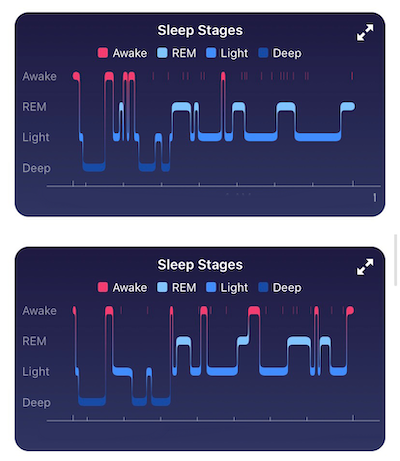
We’ve seen me use the Fitbit wearable to track a baseline level of activity while home-bound, and how getting adequate, quality sleep is a part of that. The piece above interested me because I’ve found that deliberately designing my activities prior to turning in have an effect on the quality of sleep – specifically, how often I awaken at night where I’m conscious.

You can see in the comparison between these two sleep graphs that the upper one has extremely short periods of wakefulness, not enough for me to remember them; the lower one has larger gaps.

It’s probably too much to optimise beyond a certain point what activities in what order have the most beneficial effect (controlling for bedtime, the evening meal and what kind of workday I have had), but the following seems to help:

  • Twenty minutes of browsing low-stimulation subreddits
  • Twenty minutes reading whatever book I’m on, on the iPad, where you can set a daily reading goal. I do this while pacing up and down, which is approximately 1500 steps and me wind down. Night Shift on the iPad is on and set to full, and the room has low-brightness warm lighting
  • Twenty minutes of solitude
  • Before any of these, I down a cup of chamomile tea. I’m a skeptic and remain so at the time of this writing, but I’m giving it a try because the US National Institute of Health published this 2010 review of the effect of the herb on, among other things, sleep:

Chamomile is widely regarded as a mild tranquillizer and sleep-inducer. Sedative effects may be due to the flavonoid, apigenin that binds to benzodiazepine receptors in the brain (68). Studies in preclinical models have shown anticonvulsant and CNS depressant effects respectively… Compounds, other than apigenin, present in extracts of chamomile can also bind BDZ and GABA receptors in the brain and might be responsible for some sedative effect; however, many of these compounds are as yet unidentified.

The whole thing takes an hour, but with it is contained my daily reddit and book reading, and a significant part of my step goal. With the benefit of good sleep and a refreshed start to the following morning, the return on that hour might be one of the highest in my day.

Categories
Data Custody Decentralisation and Neutrality

Yet another smart device rendered useless

More news about an Internet-connected hardware product being rendered unusable as a result of a business decision: “Canadian smart glasses going ‘offline’ weeks after company bought by Google

North said Focals 1.0, its first generation of smart glasses released last year, will be discontinued. The wearables company also said it has cancelled any plans to ship its second-generation Focals 2.0.

“Focals smart glasses and its services are being discontinued and will no longer be available after July 31, 2020. You won’t be able to connect your glasses through the app or use any features, abilities, or experiments from your glasses,” the statement read.

As of Saturday, users will no longer be able to log into the Focals app and its support services will be discontinued. The app will also be removed from Google Play and the Apple App Store.

We have seen many examples of this happening before: “Smart devices are services, not products”, “More on the inherent temporariness of internet-connected devices“.

If your device or appliance requires an Internet connection to the manufacturer to function, it’s a big risk. Be very conscious of this when you make purchases. Consider devices that work with the open source home automation framework OpenHAB, as an alternative and invest the time needed to make it work – it’s not an out of the box experience but now you alone get to decide how long your device lasts.

Categories
Uncategorized

An identity of one’s own

In my opinion, the most important bit from this article “I quit my job at the start of the pandemic to launch a company. Here’s what I’ve learned in the first 90 days.

You are most powerful when your identity is tied to your own name.

You know when you’re at a party, and someone asks you, “So, what do you do?” And then you respond with your most impressive identity. Like most people, my identity was always wrapped around something external. I was a “student,” a “college newspaper editor,” and later, a “journalist.”

And for the last five years, “Polina Marinova, writer and editor at Fortune magazine” sounded pretty damn good. But I wasn’t in control of that identity. If I ever got fired, there goes my entire self-worth — and losing that is a recipe for psychological disaster. The best thing I did for myself is start The Profile in 2017 because it gave me another identity — one that allowed me to be 100% myself.

Start a newsletter, a passion project, or a new venture that lets you tie your identity to something that actually matters — your own name. Nothing is more liberating.

While we have talked before about owning your identity, this goes hand in hand – an identity that is one’s own.

Categories
Uncategorized

Twitter threads as new publishing medium

Back in January we discussed Twitter threads being used as mini-blog posts. Later, when I reflected on how I planned to consumer Twitter (and Reddit) going forward, I had said

… people’s use of Twitter has changed in the last year. The cumulative effect of the doubling of character limits, the ease of creating Twitter threads, the grouped display of conversations and Twitter’s own quality-filtering is that there are interesting, valuable discussions on Twitter itself…

Earlier I came across this full-fledged 29-tweet threaditcle on the oat milk producer Oatly.

1/ Oatly doesn’t think like the rest. They’ve been around for 20 years as a Swedish company fighting for attention. Last week, the oat milk company raised $200mm at a $2bn valuation. This is a lesson on creativity and how @oatly turns disadvantages into massive opportunities.

— Kevin Lee (@kevinleeme) July 24, 2020

Not only can tweets display text and linebreaks like they always have but now, just like on Medium or WordPress, tweets support multiple images, links, embedded media like video, all with rich previews. Unlike other publishing media, tweets also support calling out other people via @ replies. And although they can be viewed as a single unit, each tweet – inherently – supports its own set of breakoff conversations that can cross-reference each other [1]. Each tweet can also be retweeted, creating other conversations with the retweet as the parent. This sort of native emergent remixing is just fascinating.

Having said this, there doesn’t exist today a frictionless, natural way to view these conversations. The comments on a single tweet are still displayed primarily linearly, when in reality they’re like a tree. i’m not suprised to see this today:

I wish Twitter had a “follow conversation” option.

— Mark Johnson (@wmdmark) July 26, 2020

The service Threader today creates a single chronological view of twitter threads, but I’d like to see it extend that capability to conversations, since increasingly that is where the value lies.

[1] Medium used to have permalinks to each paragraph. I can’t find them anymore. Perhaps they are only available when logged-in as a reader, and I do not have a Medium account. Dave Winer’s blog also has such permalinks.

Categories
Uncategorized

Raw data vs analytics – free vs paid

Continuing for a day more with the topic of Fitbit: many analytics that go beyond the basic visualization that is displayed in the app or is available for download on the web dashboard, is only available via a paid subscription, which Fitbit calls Premium. We talked about Premium a little in the context of discovery vs curation.

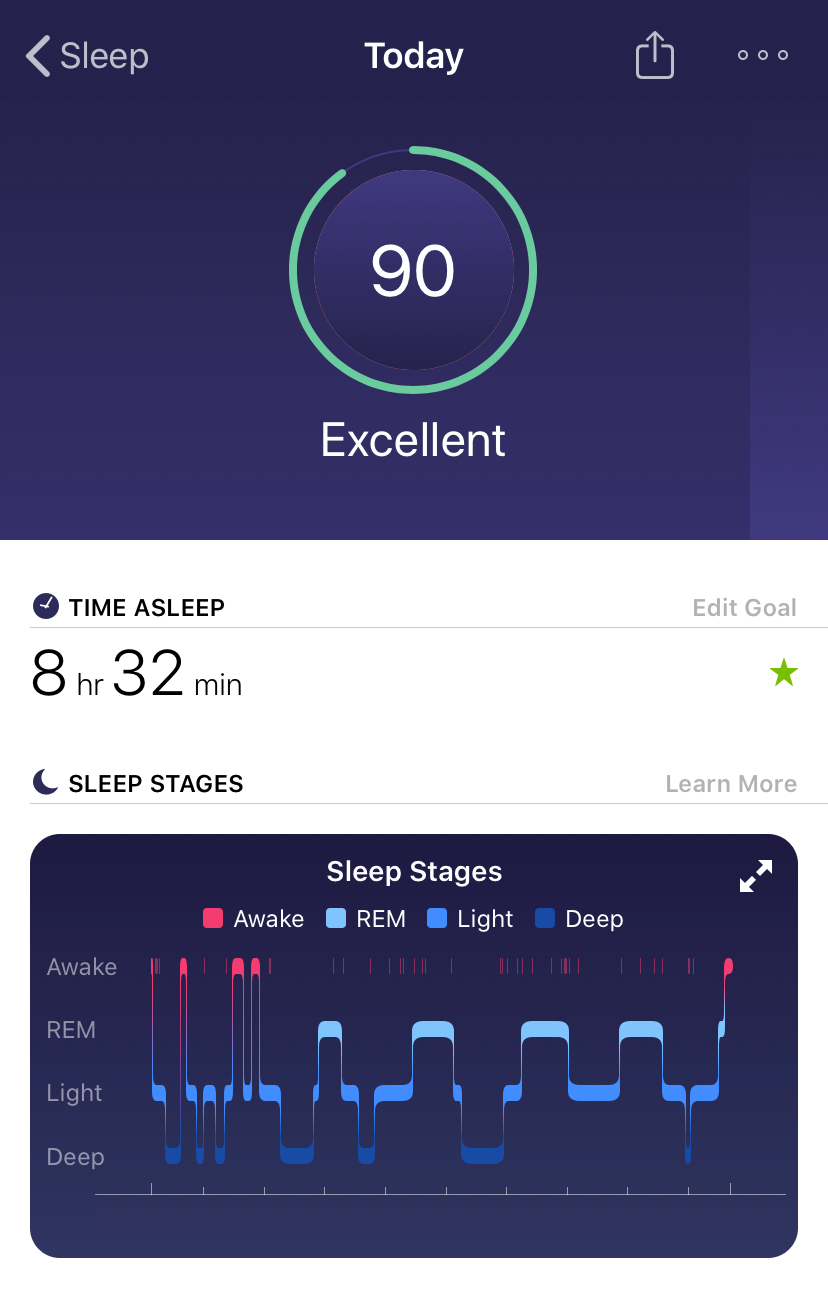
To give you an example, this is the sleep phase chart in the company’s app for a single night’s sleep:

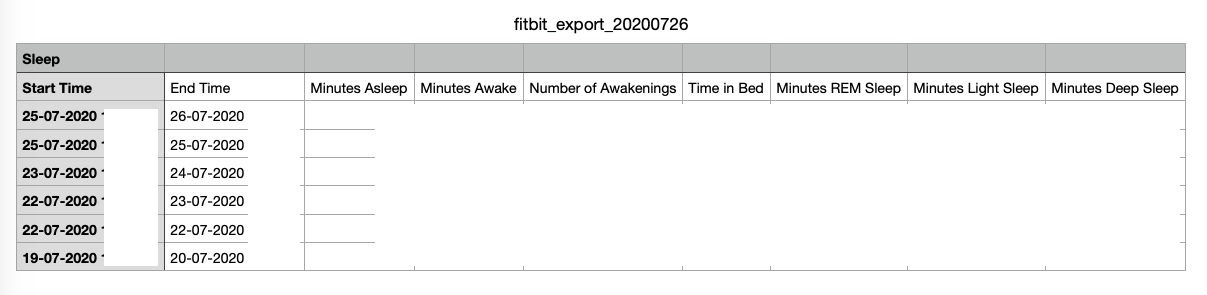
From the Fitbit site, you can export your sleep data. But my data for the week only includes summaries on this sort (data hidden)

So clearly Fitbit has access to much more granular data to generate that chart than is required to generate that table. However, that access is only available via the Fitbit API. For instance here is the API documentation page for sleep data.

This endpoint supports two kinds of sleep data:

stages : Levels data is returned with 30-second granularity. ‘Sleep Stages’ levels include deep, light, rem, and wake.

classic : Levels data returned with 60-second granularity. ‘Sleep Pattern’ levels include asleep, restless, and awake.

If you write your own software, you can authenticate to and download your own data at down to thirty second granularity. For the example in the chart above, that’s 1024 data points, each stating the timestamp and which stage of sleep I was in. This is extremely valuable (and not to mention my own data recorded by a device i have paid for!) I support Fitbit’s decision to restrict analytics such as sleep score to premium users – this is Fitbit’s IP and its prerogative. However, it does need to make its users’ raw data available for download much more widely. It should not require technical expertise.

This article describes an example of a person downloading and charting his own heart rate data from Fitbit. I intend to teach myself to download and process my own data. In fact, I am going to explore if I can use iOS shortcuts and the actions that Data Jar makes available to Shortcuts to process JSON data – and Charty to plot graphs. We will revisit this some time.

Categories
Uncategorized

Saying no

From the last post:

For the last few days, after noticing the pattern and having done this reading-up [on the purpose of REM
sleep], I’ve become even more conscious about limiting information exposure.

I should have mentioned that there is some limited material available on the possible effects of excessive REM sleep. From Fitbit’s own blog:

Consistently getting too much REM could also create problems. “If you go too much over 25 percent of REM, it might cause too much brain activation, which can leave you angry and irritable and can even potentially exacerbate depression and anxiety symptoms,” says Grandner.

From S+, the sleep aid device and tracking service:

Stress, on the other hand, can extend REM sleep beyond normal levels. Too much REM sleep can actually leave you feeling tired the next day.

So (a) if my share of REM sleep is definitely over normal, putting me at risk for stress, tiredness, irritability and even depression, and if REM seems to have to do with processing the information gathered during the day, it follows that one way of testing this link is to limit information exposure. We have already seen my reflections on the 30 day Reddit and Twitter isolation I tried over the end of June and most of this month. I had said that I would continue to consume Reddit and Twitter in a time-boxed manner, deliberately. That limits causal attention capture.

The other thing I have already begun doing is simply saying no to viewing and reading links and videos that friends and family send me, typically over Whatsapp, unless they’re in an area of interest. Even then I’ll probably queue them in my read later list. If the person that shared asks if I had seen what they had shared, my answer is no.

This may seem excessive and anti-social (and obviously I have been told so), but the cumulative effect of this casual consumption is quite high. I appreciate that someone chose to share something interesting with me, but the cost for me (or anyone) to consume is much more than the cost of tapping share and send. A side effect is that when I do end up viewing or reading those few items that I queue, I can write back to the sharer about it, often leading to a short but usually interesting conversation.