Categories
Data Custody Decentralisation and Neutrality Personal Finance Privacy and Anonymity Real-World Crypto The Dark Forest of the Internet

Dalio on Bitcoin – store of value and its threat to governments

Some extracts from the hedge fund manager Ray Dalio’s public note about Bitcoin.

I believe Bitcoin is one hell of an invention. To have invented a new type of money via a system that is programmed into a computer and that has worked for around 10 years and is rapidly gaining popularity as both a type of money and a storehold of wealth is an amazing accomplishment.

Because of what is going on in the world, besides there being a growing need for money or storehold of wealth assets that are limited in supply, there is also a growing need for assets that can be privately held. Because there aren’t many of these gold-like storehold of wealth assets that can be held in privacy and because the sizes of their markets are relatively small, there exists the possibility that Bitcoin and its competitors can fill that growing need.

He does make a counter-argument against supply: that while Bitcoin itself is limited, there is no limit to the number of cryptocurrencies that can be created in the same manner. As untamperable and un-shut-down-able as Bitcoin.

Speaking of untamperable, Dalio recognises that the biggest threat to Bitcoin is not an attack on the chain itself, but in governments restricting access to it in the first place.

I suspect that Bitcoin’s biggest risk is being successful, because if it’s successful, the government will try to kill it and they have a lot of power to succeed… for good logical reasons governments wanted control over money and they protected their abilities to have the only monies and credit within their borders. When I a) put myself in the shoes of government officials, b) see their actions, and c) hear what they say, it is hard for me to imagine that they would allow Bitcoin (or gold) to be an obviously better choice than the money and credit that they are producing.

This is potentially what could happen in India. While the government recognises – rightly – that cryptocurrency isn’t clearly either a currency or an asset and therefore doesn’t fit into existing regulatory frameworks, its approach to it seems to be one of antipathy. A bill that may be tabled and discussed in the coming weeks is described in the current parliamentary session agenda as one that intends to

… create a facilitative (sic) framework for creation of the official digital currency to be issued by the Reserve Bank of India. The Bill also seems to prohibit all private cryptocurrencies in India, however (sic) it allows for certain exceptions to promote the underlying technology of cryptocurrency and its uses.

Categories
Data Custody Privacy and Anonymity Products and Design

On the internet, there’s no such thing as lost forever

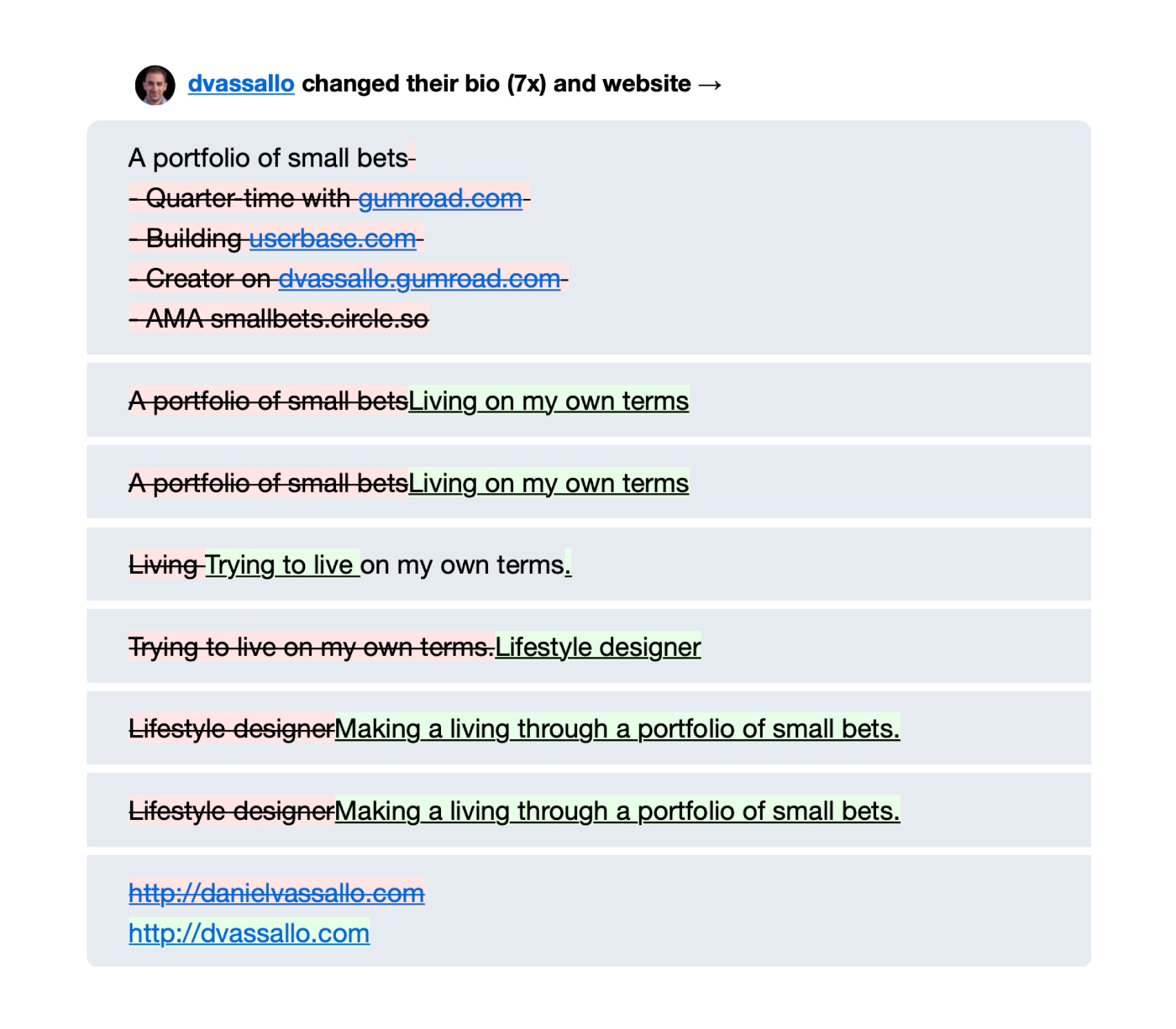
Spoonbill snapshots and tracks the changes people make to their Twitter bios, displaying those changes as a timeline. It’s a view into how people express their identity. Especially when that identity needs to be compressed into a couple hundred characters. This article is a good overview of both the service and its implications, using lots of examples such as this one:

The writer says

Spoonbill not only satisfies our tendency for online lurking, but pushes it into voyeur territory; surfacing what’s meant to be hidden is intimate in a way that scrolling a timeline isn’t.

The app isn’t doing anything special in terms of data access. This is an official Twitter API, and it’s how alternative Twitter clients work. What’s special is that it places previously scattered, obfuscated data side by side. That’s what creeps people out.

This is another aspect of privacy isn’t it. We think of it primarily as ‘someone is reading what I type or browse’. It is, but the other aspect is also analysis of data you reasonably expect to be ‘in the wind’.

Say you shopped locally at a grocer’s, a pharmacist’s, a greengrocer’s, your local pub, your barber, and so on. You know that each of them knows what you’re buying. Now imagine they pooled together their receipts and ran a pivot table on them. And now when you visit the greengrocer, (s)he says ‘You bought antacid on Monday? Don’t buy your oranges and kiwis; they might exacerbate it. Here’s some bananas.’ and now you’re freaked out.

Essentially, be aware that most things you put out on the internet that can be seen publicly can also be catalogued, put together and analysed. Just like Spoonbill did. Just because you change something does not mean the previous version is lost forever – no such thing.

Categories
Decentralisation and Neutrality The Next Computer

The physical limits of software and the Internet

There’s a worldwide shortage of semiconductor chips. Across industries. Nearly every device we own today has chips, and often dozens of them. We think of chips as essentially infinite in number. But:

Industry executives also blame excessive stockpiling, which began over the summer when Huawei Technologies Co. — a major smartphone and networking gear maker — began hoarding components to ensure its survival from crippling U.S. sanctions… Rivals including Apple, worried about their own caches, responded in kind… “There’s a chip stockpiling arms race,”

All that has dried up the spigot for smaller-volume buyers such as the makers of cars and gaming consoles: Nintendo Co., Sony and Microsoft Corp. have struggled to make enough Switches, PlayStations and Xboxes for about a year… [a] growing chorus of industry leaders warning in recent weeks they can’t get enough chips to make their products. Carmakers appear in direst straits and have spurred the U.S. and German governments to come to their aid

– “Chip Shortage Spirals Beyond Cars to Phones and Consoles

We discuss the centralisation of the Internet on this site. This article shows that even the other end of the stack – chips, the building blocks of hardware, are centralised.

It also shows that while we aren’t wrong in thinking of the Internet and software in general as infinite, there are real physical constraints for the hardware that it all runs on.


(Featured Image Photo Credit: @awmleer/Unsplash)

Categories
Data Custody Privacy and Anonymity The Next Computer Wellness when Always-On

A no-bullshit look at Facebook’s and Apple’s privacy propositions – Part 2

(Part 1 – How Facebook’s using guilt to get people to voluntarily opt out of Apple’s privacy protections)

There is a kernel of truth in Facebook’s argument that “with the upcoming iOS 14 changes, many small businesses will no longer be able to reach their customers with targeted ads”. Targeted ads work better than generic, non-targeted ones. And facebook is able to provide user targeting like no other for two reasons: because people share very personal information on Facebook, and because outside of that, Facebook aggressively collects information on people through their activities outside of Facebook, both via businesses who themselves install Facebook tracking to understand their customers better and through other companies they call “Audience Data Providers

However, Facebook’s ad targeting can be used by businesses large and small. A small burger joint in a city in theory could use Facebook’s sharp targeting to reach its type of customers in its catchment area. But a nationwide burger chain or its franchisee can use the same targeting software to drive people to its store instead, often outspending the independent small business. Facebook makes no promises to small businesses that this is only about them.

It follows that should a person agree to allow themselves to be tracked, Facebook also makes no claim to its users that that information will only be used by small businesses. Just like Facebook’s ad software is available to businesses large and small, user data once collected is also available to any company with a Facebook ad account.

So while Facebook’s ability to track people in such detail doesn’t really give small businesses any sort of sustainable competitive advantage, it doesn’t give its users any choice about trading their data to support an ostensibly noble cause.

Finally, Facebook’s argument holds weight only because of its dominant position in the online ad business, alongside Google. A small ad network would hardly be taken seriously if it claimed to stand up for small businesses nationwide, leave along globally. It’s disingenuous for Facebook to accuse Apple of using its dominant position to push its own agenda while it does the exact same thing. 

Apple’s position on privacy is simple. As one of its ads says, “What happens on your iPhone stays on your iPhone”. [1] It is a commitment one party makes to another, no one else, and that party proves it by aligning its interests to the others’.

Facebook’s (opposite) position on privacy is more messy and conflicted. It urges one party (its users) to make sacrifices (allow data tracking) in order to benefit a third party (small businesses) whose thriving only it (Facebook) can ensure. That does not sound like a healthy relationship between any of the parties

As we’ve discussed many times on this site, in the Internet we’ve ended up building, the question of privacy is one of data custody – who you trust with your data. And in that regard, I’d much rather cast my lot with Apple that with Facebook.

End note: One could argue that Google’s stance on privacy, while being the opposite the opposite of Apple’s, is also straightforward: give me data, I’ll make your life dramatically better. Search, Gmail, Google Maps, Google Photos, even the much-missed Google Reader. I’d trust Google with my data way before I trust Facebook.


[1] This is in the context of how Apple’s AI to categorise photos and other data works on-device instead of first sending all data to some central server.

Categories
Data Custody Privacy and Anonymity The Next Computer Wellness when Always-On

A no-bullshit look at Facebook’s and Apple’s privacy propositions – Part 1

Facebook is guilting people who use their iPhone app. iOS 14’s App Tracking Transparency now requires app makers to explicitly get people’s assent to be tracked. If the phone user declines, iOS only sends generic information that’s really hard to trace back to any identifiable person.

Obviously, this works against Facebook’s interests. It’s built a seven-hundred-billion-dollar company over fifteen years on the back of a sophisticated, extremely aggressive data collection and ad display business.

Facebook’s tried public pressure and PR to lobby against this intervention, arguing that this opt-in hurts not it, but small businesses, who rely on Facebook ads to target would-be customers.

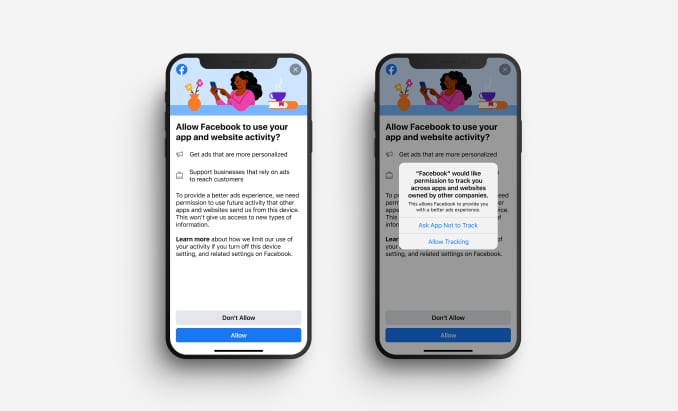
Now Facebook’s building that argument right into its app, with a full-screen appeal to its users to allow themselves to be tracked in detail, so that small businesses may thrive. First reported by CNBC, here is what the screen supposedly looks like (left, before Apple’s prompt to the right):

Facebook’s CEO has said publicly that the company sees Apple as a competitor because “has every incentive to use their dominant platform position to interfere with how our apps and other apps work, which they regularly do to preference their own… Now Apple may say that they’re doing this to help people, but the moves clearly track their competitive interests.”

Now, Facebook’s straight-up ‘gaslighting’ people into voluntarily overriding Apple’s protections.

(Part 2 – comparing how Facebook and Apple talk about people’s data)

Categories
Products and Design The Next Computer Wellness when Always-On

Disturb by default

This Hacker News thread asks an interesting question: When did “disturb” become the default mode for devices? Specifically,

A few days ago I took a nap and set the DND –do not disturb– on a timer for 1h. Once the timer finished it went by default to “Turn off DND”, which is the same as “disturb me please”… Because of this I was wondering when did the “disturb” mode became (sic) the default? This applies to my phone as well, which I always have with DND turned on. How is it that we have to turn on DND. Shouldn’t it be “turn on disturb mode”?

Some of the answers I found worth sharing:

people generally want to be disturbed by notifications. Just consider how many people don’t keep their phone in silent mode. I don’t think it’s the ideal way to live, but people love running over to their phone to see if it’s a new WhatsApp message that cause the ping.

At the beginning of the smartphone era, there just weren’t that many disruptions to warrant a DND mode. Most notifications were interesting. And we didn’t have wearable devices tethered to phones or computers either. The normalization of distraction kind of got us by surprise, society-wide, and it’s only now that new UX patterns are developing to help people manage it.

My theory would be that that:

> “disturbable by default” is a carry-over from landline-only time
calls where rarer in landline-only time because they (sometimes) cost money
> calls where rarer in particular times (eg late at night) because of a social norm
> calls in the middle of the day where probably rarer, but also much easier to ignore because you were not at home and your phone simply run in the void
> calls were mostly done by human beings

Now, the “phone calls from a human being who respects social norms or that I simply never hear” have been replaced by “automated notifications from bots in a piece of plastic that’s constantly in my pocket, or text messages from people that expects me to be reachable at any time.”

Categories
Products and Design The Next Computer

iPhone home screen, February 2021 – widgets-only, again

(Previously:August, September, October, November, December, January home screens)

Little has changed from my home-screen-less, widgets-only setup from a couple of months ago. It’s likely going to stay this way until iOS 15 or later introduces something new.

A couple of comments, though:

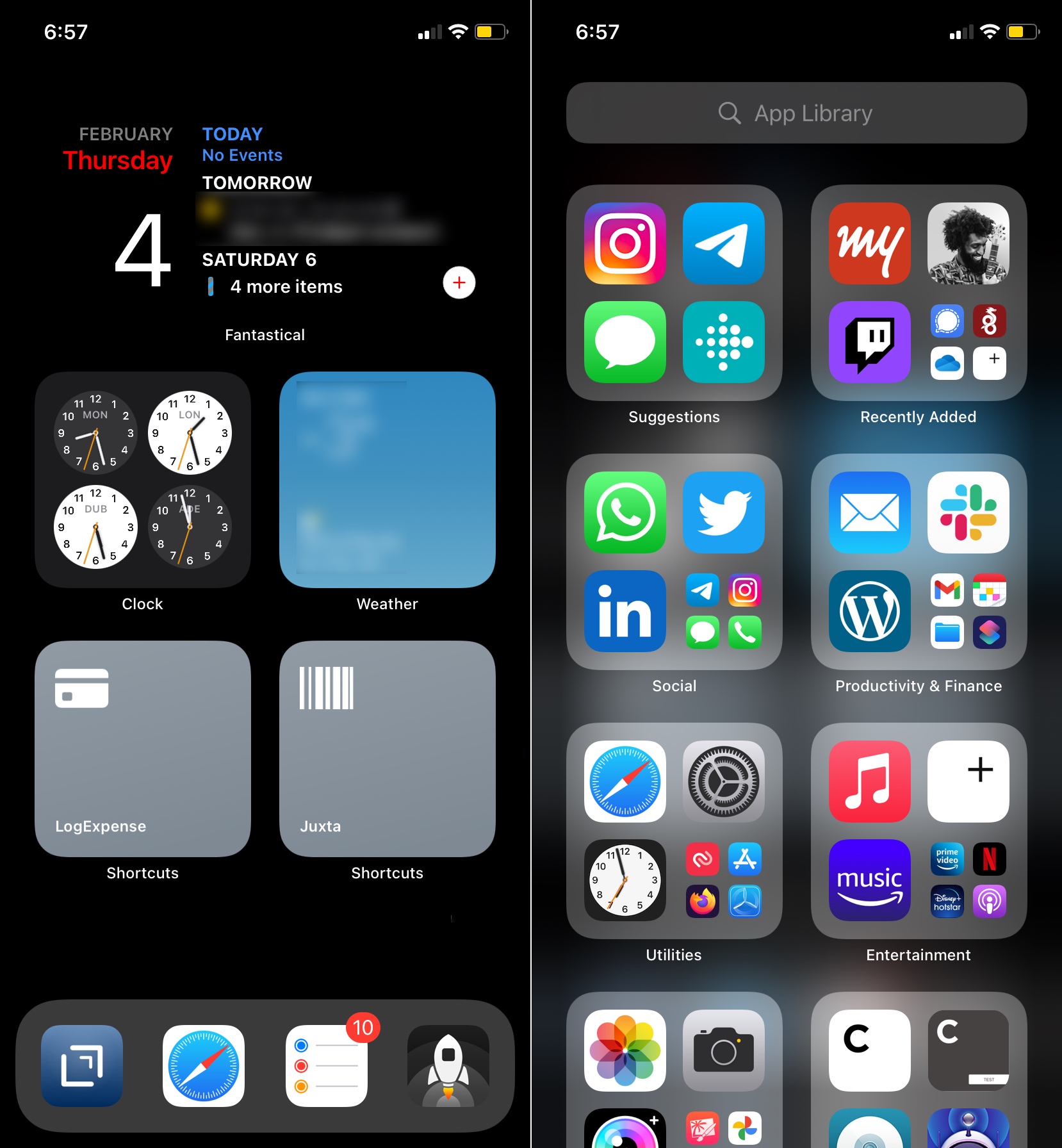
I use the App Library as one way to launch my apps [1]. iOS do a good job of surfacing the most used apps in any App Library folder. But muscle memory forms pretty quickly, and I can now locate my most-used applications without even thinking about it. The brain just know, spatially, where they are on the App Library screen

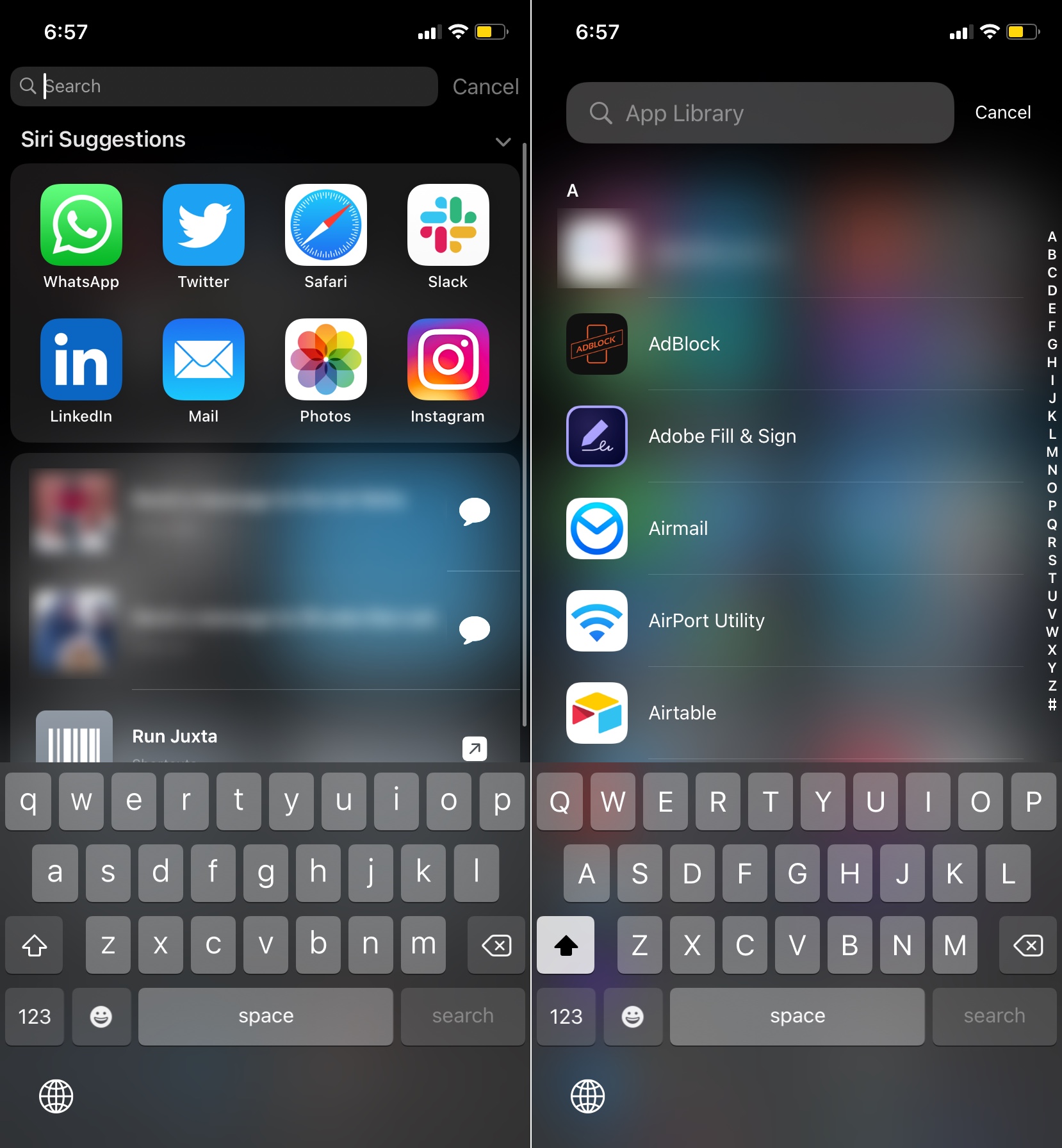
There are two search bars, and it’s annoying. One is Spotlight, activating by swiping down on any screen. The second is the App Library search, activated by swiping down in the same way on the App Library screen.

Because I’ve deleted all home screens but the mandatory one, I have two screens that both reveal a search bar with the same action – but the search bars are totally different. Not just visually, but one searches files, contents in apps, Shortcuts, the web. The other lists apps.

Often I’m not consciously aware of which screen I’m on, I’ll search for some data in the App Library search bar and get no results. When I realise, after a second, that this isn’t the right screen, I need to abandon the search, switch to another screen or swipe down all the way from the top to invoke Spotlight, then type my text all over again.

I’m sure there’s a good reason for designing things this way [2], but it annoys me at least once a day.


[1] Siri Suggestions when swiping down to reveal Spotlight is another.

[2] Most people have a problem of too many home screens, not too few. Apple intended App Library to be a seldomly-used repository for apps that don’t need to live on a home screen or in a folder, but still need to be accessible. I use App Library as my only home screen, the opposite of what Apple designed it for.

Categories
Privacy and Anonymity Wellness when Always-On

Freedom from looking over your shoulder

The trope is if you don’t have anything to hide, why do you want stuff to be private?

Ask yourself this:

Can you say what your want, even 1:1, without fearing someone will attack you?

Can you search for and browse whatever you want. Without fear of being watched or found out?

Can you store whatever you want? (don’t break laws) Without fear of being flagged by someone’s policy?

Chances are, the answer to these is at least partially no. That should make clear why you need privacy.

Categories
Data Custody

“I don’t mind being locked in”

… The system provided by Hey for managing and organizing incoming email is what sets it apart from the competition, and it’s so good I don’t mind being locked into a proprietary service.

– Federico Viticci, Macstories

Famous last words, uttered by countless computer users over the last fifty years, to their inevitable regret.

Categories
Privacy and Anonymity The Next Computer Wellness when Always-On

Federated learning, cookies and keeping it simple when it comes to privacy

Google’s building what the company says is an alternative to cookies that collect interest-based information based on a person’s browsing pattern. Called federated learning of cohorts or FLOC, the project has made some code available on the code-sharing service github. From that page:

The browser uses machine learning algorithms to develop a cohort based on the sites that an individual visits. The algorithms might be based on the URLs of the visited sites, on the content of those pages, or other factors. The central idea is that these input features to the algorithm, including the web history, are kept local on the browser and are not uploaded elsewhere — the browser only exposes the generated cohort. The browser ensures that cohorts are well distributed, so that each represents thousands of people.

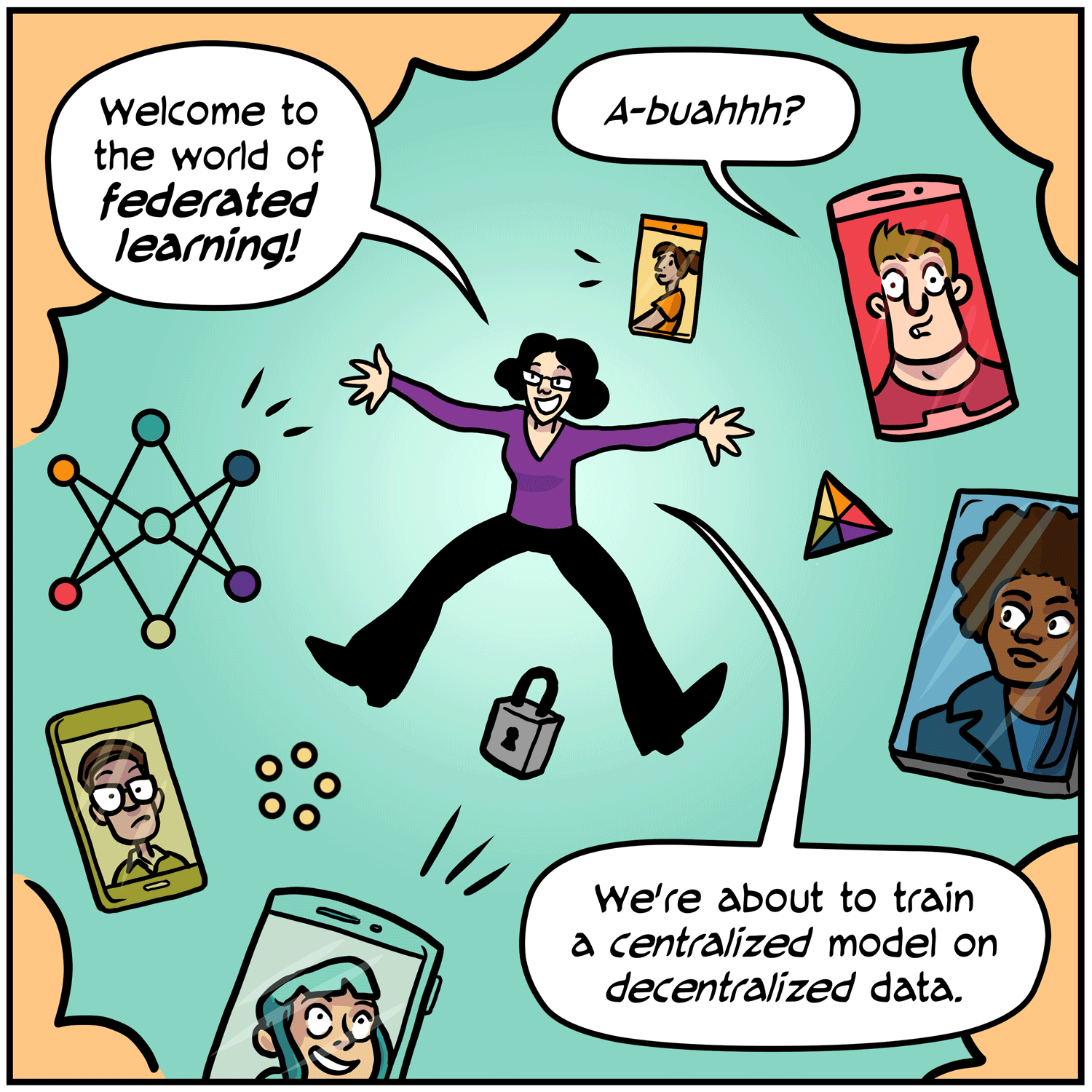
Google also created a comic to explain Federated Learning in general, which can be applied to projects other than displaying ads on web pages:

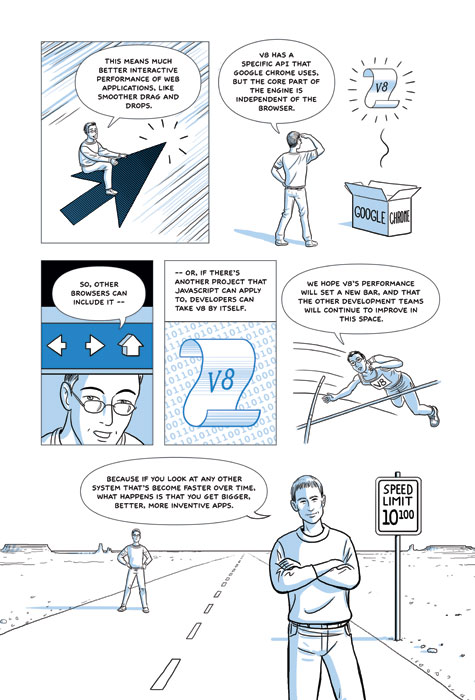
It’s a far, far cry from the one Google made over twelve years ago when it announced the then-revolutionary Chrome browser.

As someone with a computer science background, I am interested in learning about and following the progress of FLOC. As someone who cares about privacy and has invested thousands of hours helping spread awareness, I will avoid information collection for the purposes of displaying ads, period. Whether it’s through cookies or fingerprinting or the supercookies we read about recently, or through federated learning.

FLOC will be rolled out in Chrome in 2021, to people who are logged in to the Chrome browser. My advice from the point of view of privacy is to avoid this altogether. Just follow good hygiene when connected to the Internet on your phone or computer (which is all the time):

Other than point #2, it’s all setup and forget. Do it.